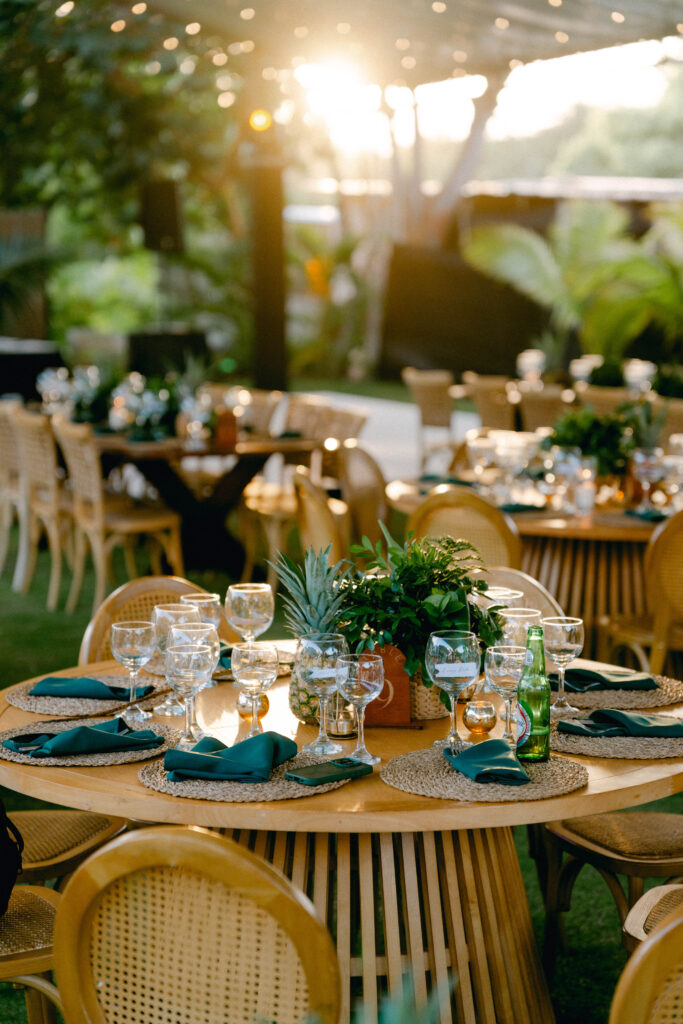
Culinary Theater: Why Dinner Is Becoming the Main Event
Live cooking stations, chef’s tables and interactive dining are replacing the plated wedding course — here’s what works, what doesn’t, and why.
The first question is almost always: “When is the best time to get married in the Dominican Republic?” The brochure answer is: “The Dominican Republic is beautiful year-round!” Which is true — and also completely useless if you’re trying to plan an outdoor ceremony.
Here’s the honest version.
The Dominican Republic has a dry season (roughly November through April) and a rainy season (May through October). But “rainy season” doesn’t mean what most couples imagine — it doesn’t rain all day. It usually means afternoon showers, often short, sometimes dramatic, and then blue skies again by evening.
What it does mean: you need a proper weather backup plan. Not a “just in case” plan — a real, tested, fully set-up alternative that your vendors are ready to execute at one hour’s notice.
I’ve planned weddings in every month of the year. What follows is what I actually tell my couples.
November is where I’d get married myself. The rainy season is winding down, the dry season is beginning, and the island is genuinely beautiful — lush and green without being relentlessly wet. Prices are lower than December and January. Venues have availability. It’s not a secret, but it’s not overcrowded either.
One caveat: early November can still catch the tail end of hurricane season. Check the long-range forecast and have your backup plan ready.
These are the most popular months, and the reasons are obvious: dry, warm, reliably sunny. The North Coast is at its best. If you’re set on guaranteed beach weather, this is your window. The trade-offs: venues book up early — sometimes 18 months in advance. Vendor availability is tighter. Prices are higher across the board. And your guests are flying during the most expensive travel period of the year.
If you want December or January, start planning now.
Dry season, less demand than December/January, still warm and reliably sunny. February and March give you the weather without the peak-season pricing pressure.
This is the window I most often recommend to couples who come to me without a fixed date. The logistics are easier, the vendors are less stretched, and your guests get a better deal on flights.
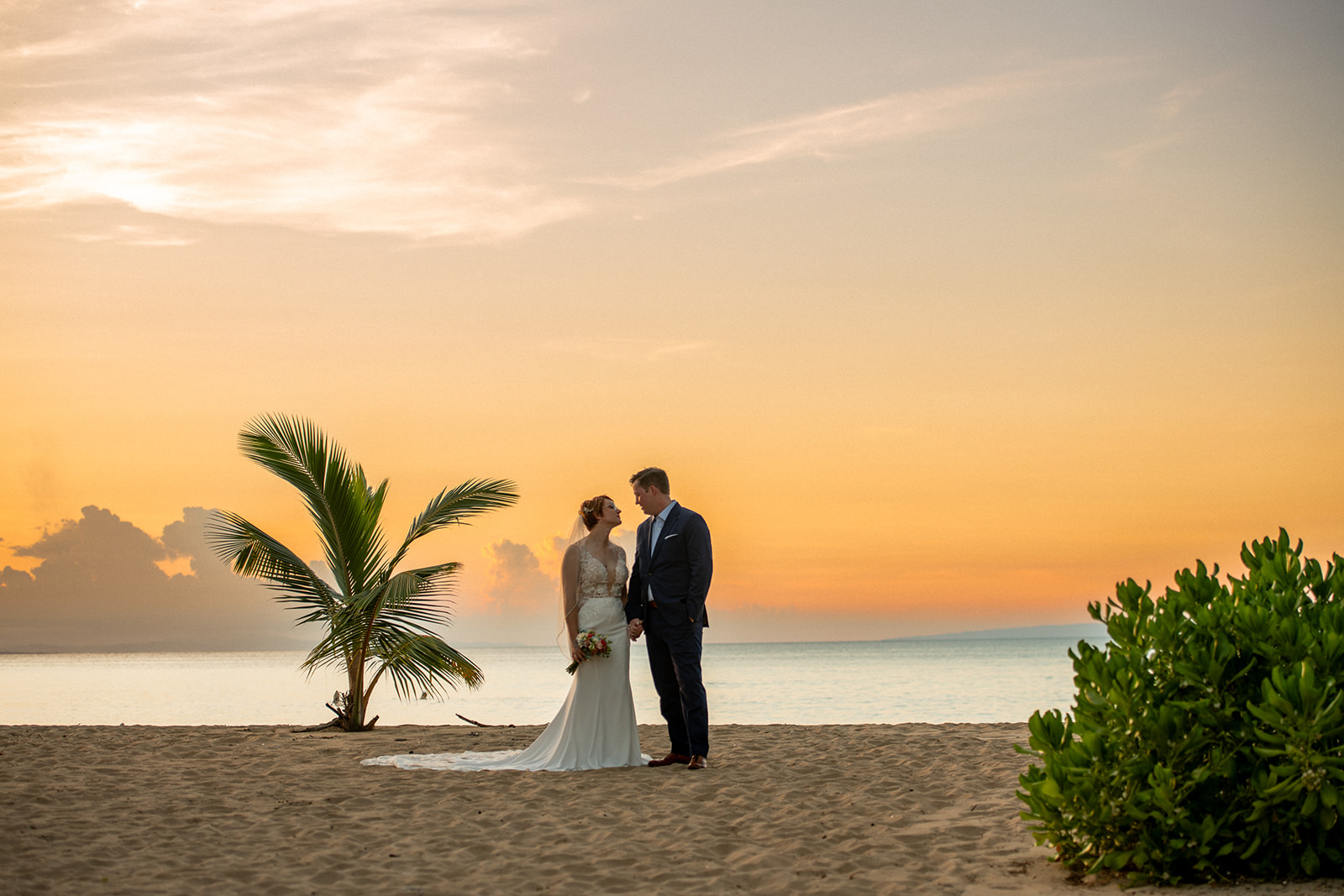
April is still dry season on paper, but the weather begins to shift toward the end of the month — particularly in the evenings. For an April wedding, I aim for the first three weeks and build a solid weather contingency. The light in April is extraordinary. If you have a good photographer and a good plan, April produces some of the most beautiful wedding photographs I’ve seen.
For every wedding, we create a thoughtful Plan B. This does not mean expecting rain; it means ensuring that a passing shower never takes away from the experience. A well-designed backup plan should feel just as intentional as the original vision.
Hurricane season officially runs from June through November, with historically higher activity between August and October. However, this does not mean these months cannot be beautiful for a destination wedding. It means couples should make decisions with realistic expectations and choose venues with the right infrastructure and flexibility.
After many years of planning weddings in the Caribbean, I have learned that the most memorable celebrations are not defined by the weather forecast — they are defined by how prepared everyone is when the unexpected happens.
I do plan weddings throughout the year, including the months traditionally considered part of the rainy season.
One thing I always explain to my couples: in the Dominican Republic, weather is no longer as predictable as a simple calendar suggests. Climate patterns have changed, and beautiful sunny days can happen during the rainy season just as unexpected showers can happen during months that are considered “dry.”
The key is not choosing a month with the expectation of perfect weather — it is choosing a team and a venue that are prepared for different possibilities.
Not sure which month works best for your plans?
Tell me your dates and I’ll give you an honest read on what to expect — and how to plan around it. Get in touch →
If you’re planning a destination wedding in the Dominican Republic and want clarity before committing to a resort package (Click here) , working with a local planner early can change the entire experience.
You don’t need more options.
You need the right structure.
Contact us for more information: hello@anniroth.com
See other interesting Blogposts:
When couples start planning, they think they're choosing a location. In reality, they're choosing a structure. Here's how to decide.
Click here
Planning the big version? Here's what 100 guests truly demands — logistics, venues, budget — before you commit.
Click here
Live cooking stations, chef’s tables and interactive dining are replacing the plated wedding course — here’s what works, what doesn’t, and why.

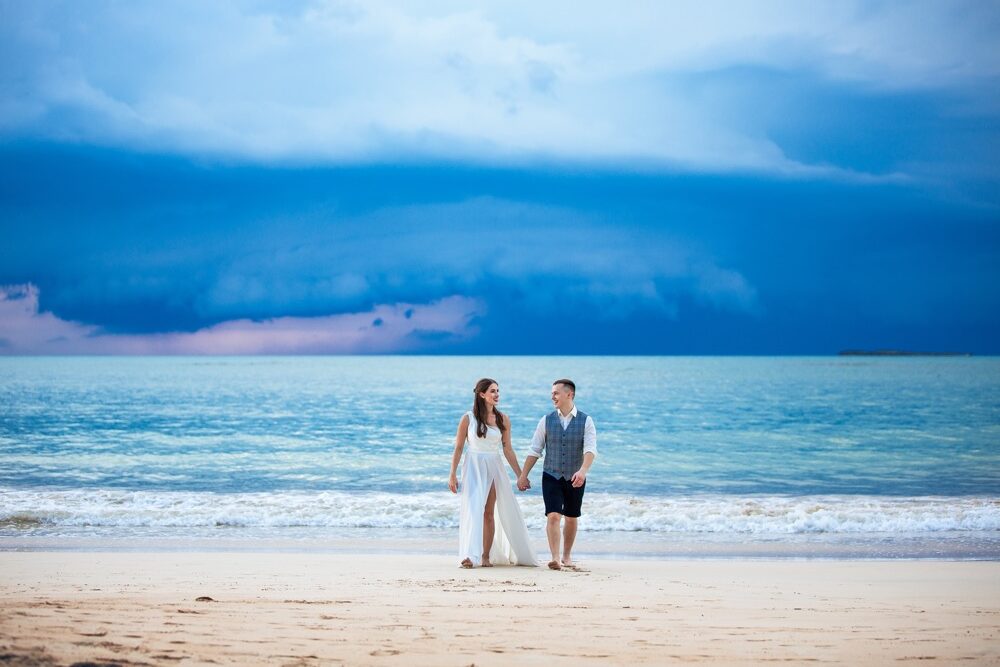
Why the best destination weddings are built as a three-day story — arrival, celebration, farewell — and what each day needs to do.

What a full property buyout actually means for a destination wedding — the privacy, the economics, and the questions to ask before you commit.
One of the first vendor recommendations couples ask me for is a photographer. It makes sense. Long after the flowers have wilted and the music has faded, your photographs are what remain.

Sustainable destination weddings in the Dominican Republic don’t mean less beautiful. A local planner’s honest guide to zero-waste without compromise.

Real numbers from a local planner: what a destination wedding in the Dominican Republic actually costs, what the categories are, and what nobody tells you upfront.