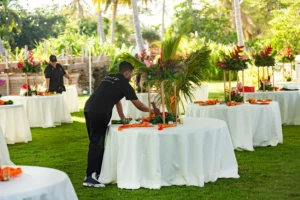
Culinary Theater: Why Dinner Is Becoming the Main Event
Live cooking stations, chef’s tables and interactive dining are replacing the plated wedding course — here’s what works, what doesn’t, and why.
The Quiet Panic Moment. It almost never happens at the beginning. At the beginning, couples are excited. Confident. Motivated. They’ve got Pinterest boards. Google Docs. A shared Notes app called “Wedding Stuff.”
They think:
“We’re organized.”
“We’ll figure it out.”
“Do we really need a planner?”
And then… there’s a moment. A very specific moment. Not dramatic. Not Instagram-worthy. Just a quiet wave of stress where something feels suddenly too heavy.That’s usually when couples realize: Oh. This is bigger than we thought.
It might be something tiny:
• A vendor stops responding
• A quote comes back double what they expected
• Two vendors give completely different advice
• A timeline no longer makes sense
• Someone casually says, “That won’t work here.”
At first, they try to fix it themselves. They send a few more emails. They Google harder.
They ask friends. But instead of clarity, they get more opinions, more confusion, more pressure.
That’s when stress sneaks in — quietly, persistently.
This is the part no one talks about. The wedding stops feeling exciting… and starts feeling like a second job. Suddenly, conversations sound like:
• “Did you follow up on that?”
• “We still need to decide this.”
• “Why is everything so complicated?”
Couples don’t argue because of the wedding. They argue because they’re overwhelmed, tired, and making decisions without guidance. This is often the exact moment someone says: “I thought planning this would be fun.”
For destination weddings, this realization usually comes earlier Different country. Different culture. Different timelines. Different expectations. What looks simple online becomes complex on the ground:
• Vendors work differently
• Logistics don’t follow Pinterest timelines
• Weather matters more than you think
• “Yes” doesn’t always mean “confirmed”
Couples suddenly understand that planning from afar isn’t just inconvenient — it’s risky.
Here’s the truth: Couples don’t reach out because they want something luxurious. They reach out because they want:
• Someone to take responsibility
• Someone who already knows the answers
• Someone who can prevent problems instead of reacting to them
• Someone who lets them breathe again
They don’t want to be in control. They want to feel safe. That’s the real turning point.
Once a planner is involved, something shifts almost immediately.
• Decisions get easier
• Communication becomes clearer
• Expectations align
• Stress drops
• The wedding feels manageable again
Not because the wedding suddenly becomes simpler — but because someone else is holding the complexity. And that’s the part couples wish they’d had sooner.
Hiring a planner isn’t about extravagance. It’s about support. It’s about protecting your time, your energy, and your relationship during a season that should feel meaningful — not exhausting.
Most couples say the same thing in the end: “I just wish we’d done this earlier.”

Live cooking stations, chef’s tables and interactive dining are replacing the plated wedding course — here’s what works, what doesn’t, and why.

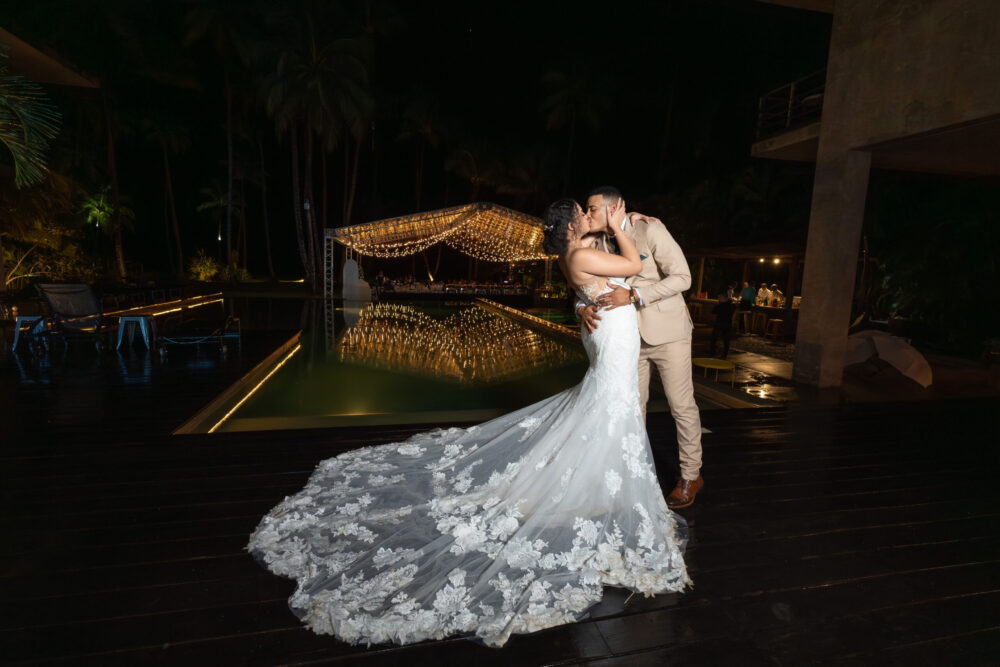
Why the best destination weddings are built as a three-day story — arrival, celebration, farewell — and what each day needs to do.

What a full property buyout actually means for a destination wedding — the privacy, the economics, and the questions to ask before you commit.

One of the first vendor recommendations couples ask me for is a photographer. It makes sense. Long after the flowers have wilted and the music has faded, your photographs are what remain.

Sustainable destination weddings in the Dominican Republic don’t mean less beautiful. A local planner’s honest guide to zero-waste without compromise.

When is the best time to get married in the Dominican Republic? A local planner’s honest guide to weather, seasons, and what the brochures don’t tell you.